
Pangea Minerals Gold Traceability Project
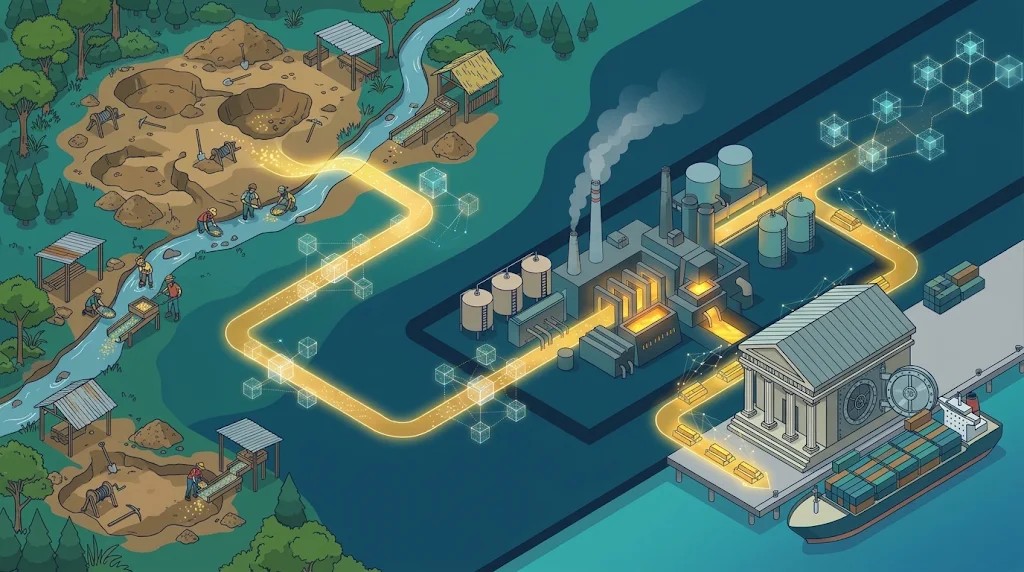
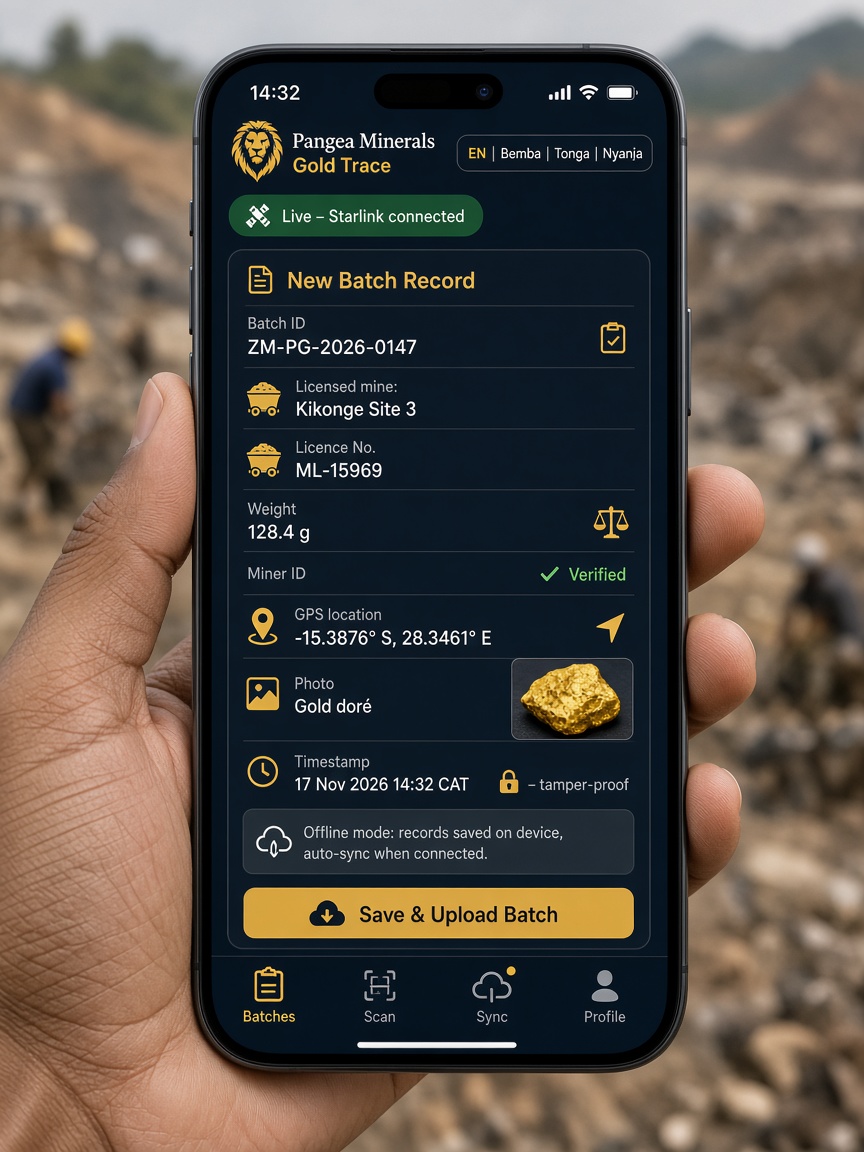
1: A mobile application (smartphone or tablet), available in English, Bemba, Tonga and Nyanja/Ngoni, creates a digital record for every batch.
On site, data is uploaded live via Starlink Mini with tamper-resistant timestamps; an offline mode stores records on the device as a fallback and synchronises them once connectivity is restored.
- Batch registration: licensed mine ID, GPS position, date/time, photos, gross weight, tamper-evident seal number, dual signatures (licence holder and witness).
- Custody log: recorded handover at every transfer (crushing and sealing at the mine, Pangea transport, buyer) with seal check, weight check and signatures. Sealed batches travel in Pangea’s own vehicle, with no third-party carriers.
- QR code per batch: linked to a tamper-evident (append-only, time-stamped) history that ZCCM-IH and authorised officials can verify at the point of purchase.
- Data sharing: batch data export via API to ZCCM-IH’s systems and, where agreed, to state systems.
2: Equipment
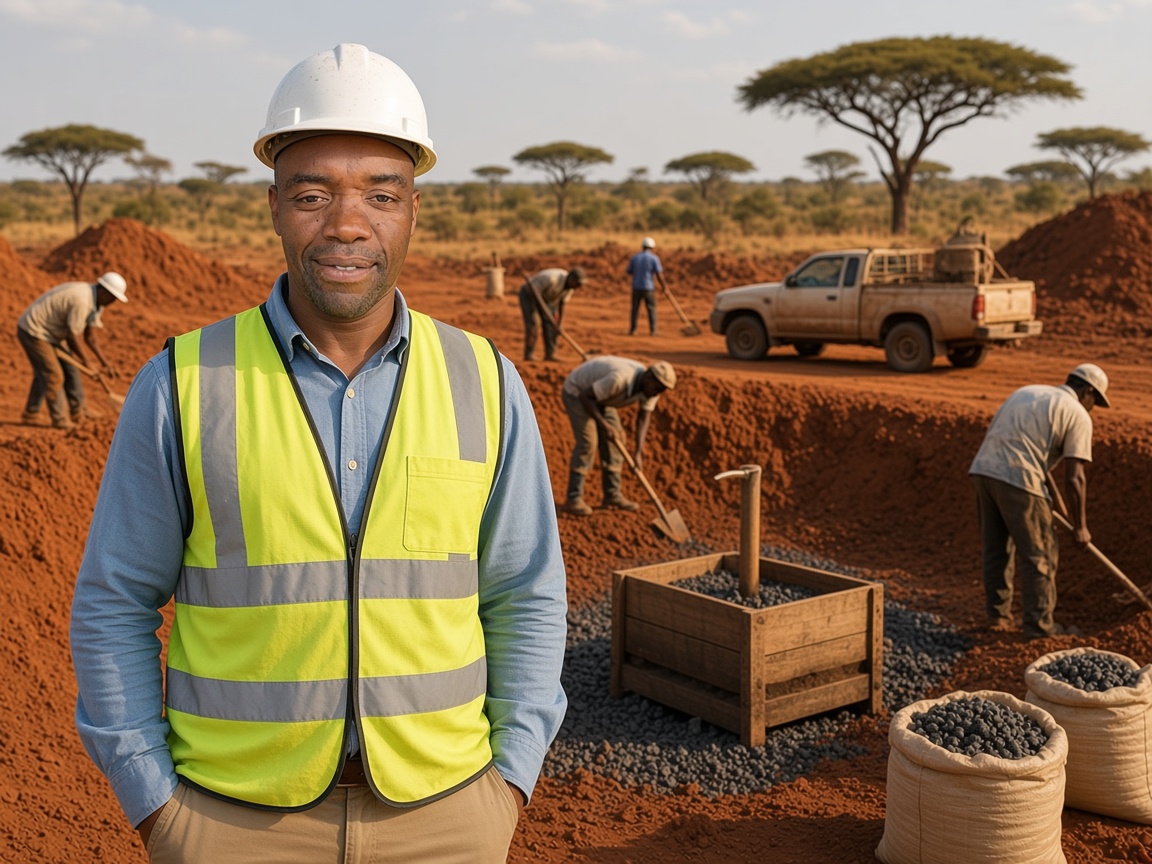
- On-site crushing control point: Pangea’s mobile crusher can be brought to each partner mine; ore is crushed on site under Pangea’s supervision, batch by batch per mine, and logged (seal numbers, photos, weights). Raw ore is not transported and material from different mines is never combined.
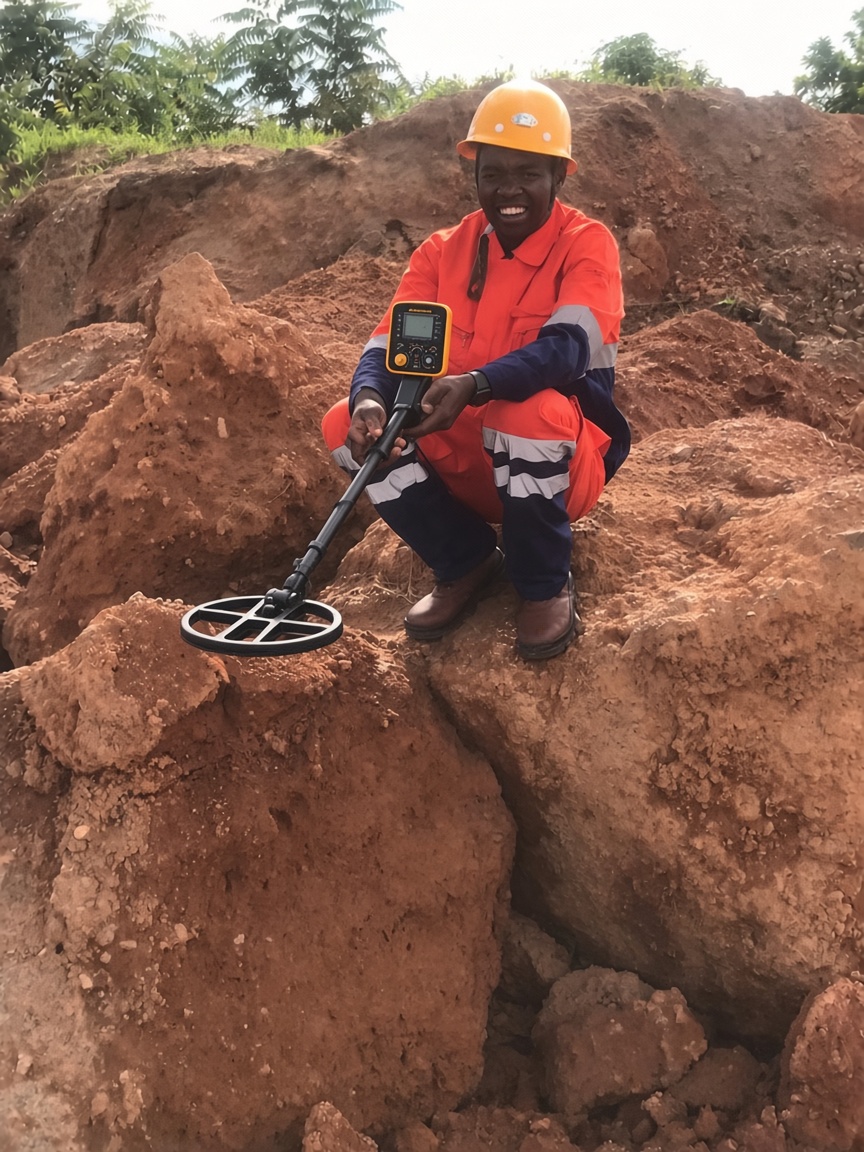
- Gold detection: Pangea owns a Garrett ATX pulse-induction gold detector, suited to Zambia’s highly mineralised, iron-rich soils. Finds are recorded at the find site in the app with GPS position, photo and timestamp. Use is intended within the licensed areas of partner mines.
- Own transport: Pangea owns a Toyota Hilux pick-up that carries the crusher to each mine and the sealed batches onward to the point of delivery, so custody remains with Pangea throughout transport.
- On-site connectivity: Starlink Mini on site enables live upload with tamper-resistant timestamps; offline mode serves as fallback.
3: Mercury-free gold mining
In Zambia, artisanal and small-scale gold mining (ASGM) is on the rise, and with it the use of mercury. Pangea Minerals strongly supports the planetGOLD Zambia project. For the past two years, planetGOLD has run educational outreach in key ASGM communities on the health and environmental impacts of mercury. It also responds with practical solutions to needs raised by miners and local communities, including the specific needs of women in the sector.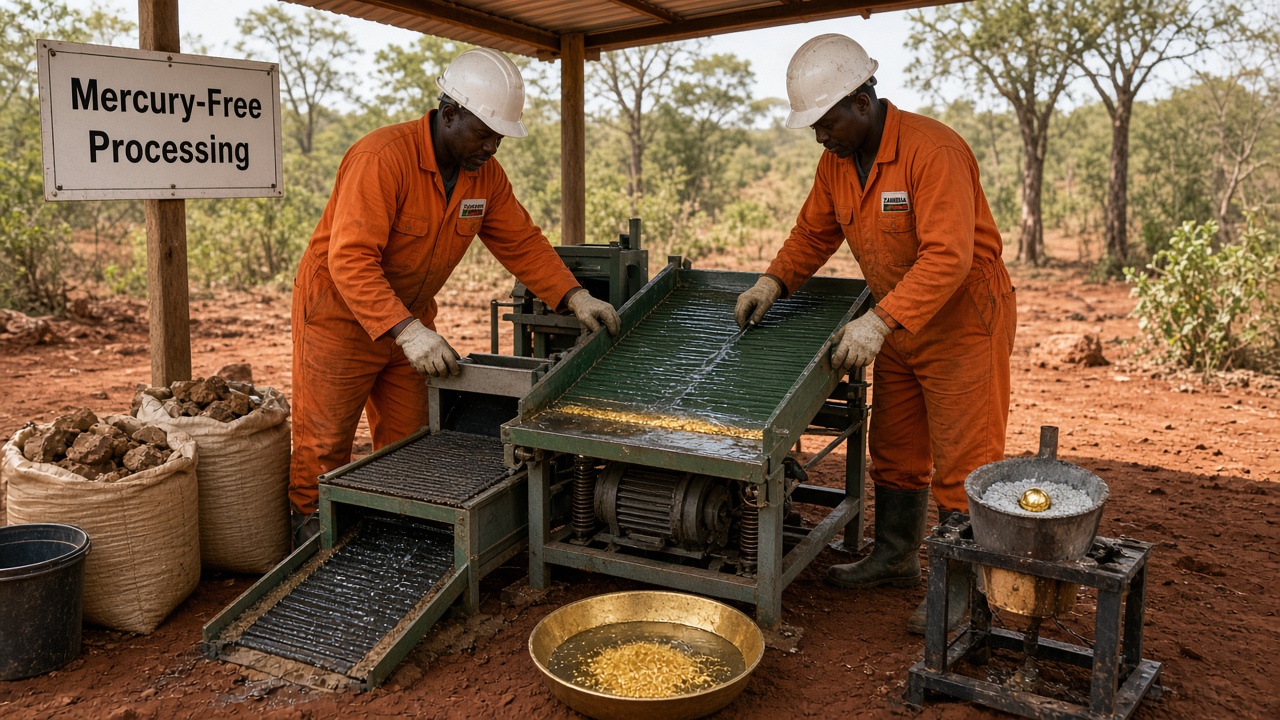
4: Services
- Retention samples: a sealed retention sample is kept per batch and analysed (e.g. at a laboratory in Kitwe) only on suspicion, with no routine laboratory testing.
- Plausibility checks: the gold yield of each batch is checked against the quantity of ore processed and against the mine’s production history; anomalies are flagged for review.
- Official documents: the official analysis/valuation certificate and clearances from the applicable procedures are attached to the batch record.
- Cashless payments: payments to licence holders via bank transfer or mobile money, creating an auditable payment trail.